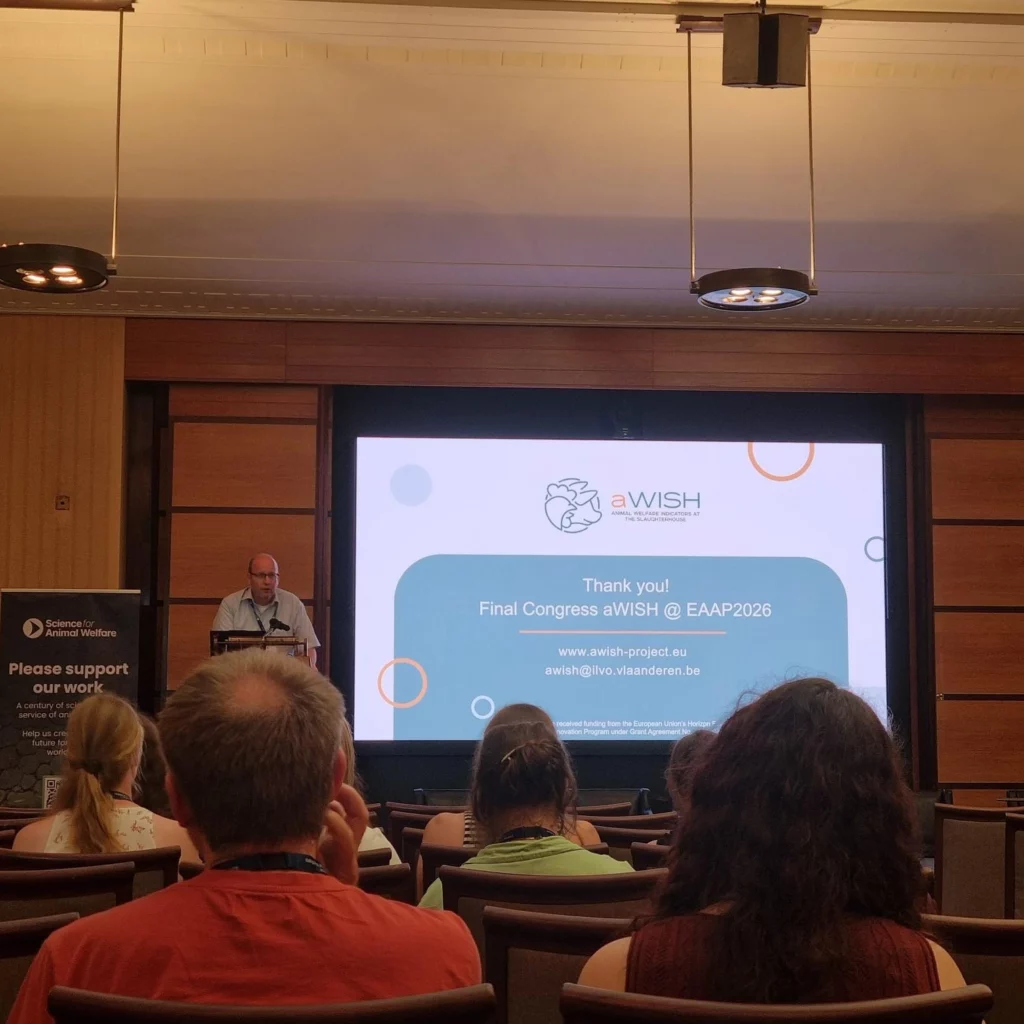



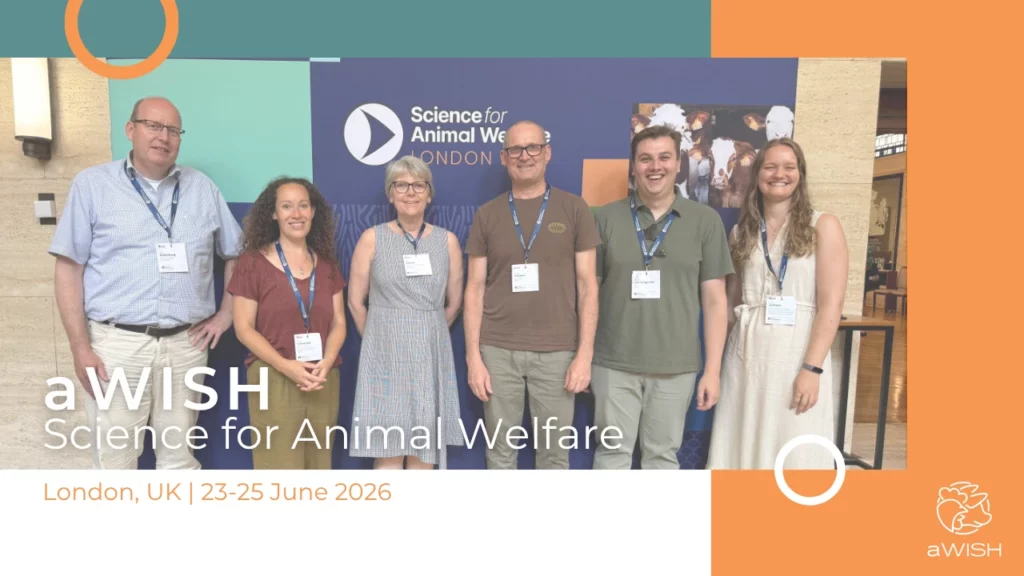
The aWISH project was prominently represented at the Science for Animal Welfare – Centenary Conference: 100 Years of Science for Animal Welfare, held from 23–25 June 2026, bringing together leading researchers and animal welfare experts to discuss the latest scientific advances in animal welfare.
Throughout the conference, several aWISH partners presented research findings and innovations developed within the project, highlighting the role of automated animal welfare monitoring, precision livestock farming technologies, and data-driven approaches to improving welfare in pig and poultry production systems.
Advancing Automated Welfare Monitoring in Broilers
Bas Rodenburg (Utrecht University) presented work on the validation of an automated system for assessing footpad dermatitis and hock burn in broiler chickens at slaughterhouses. The study evaluated the performance of the ChickenCheck camera system against trained human assessors and demonstrated that automated monitoring can reliably assess these important welfare indicators.
The results show how computer vision technologies can support the continuous monitoring of large numbers of birds, providing valuable welfare information across farms, production chains and regions. The work contributes to aWISH’s broader objective of developing practical tools that support welfare improvement throughout the poultry production chain.
aWISH Project Progress and Key Achievements
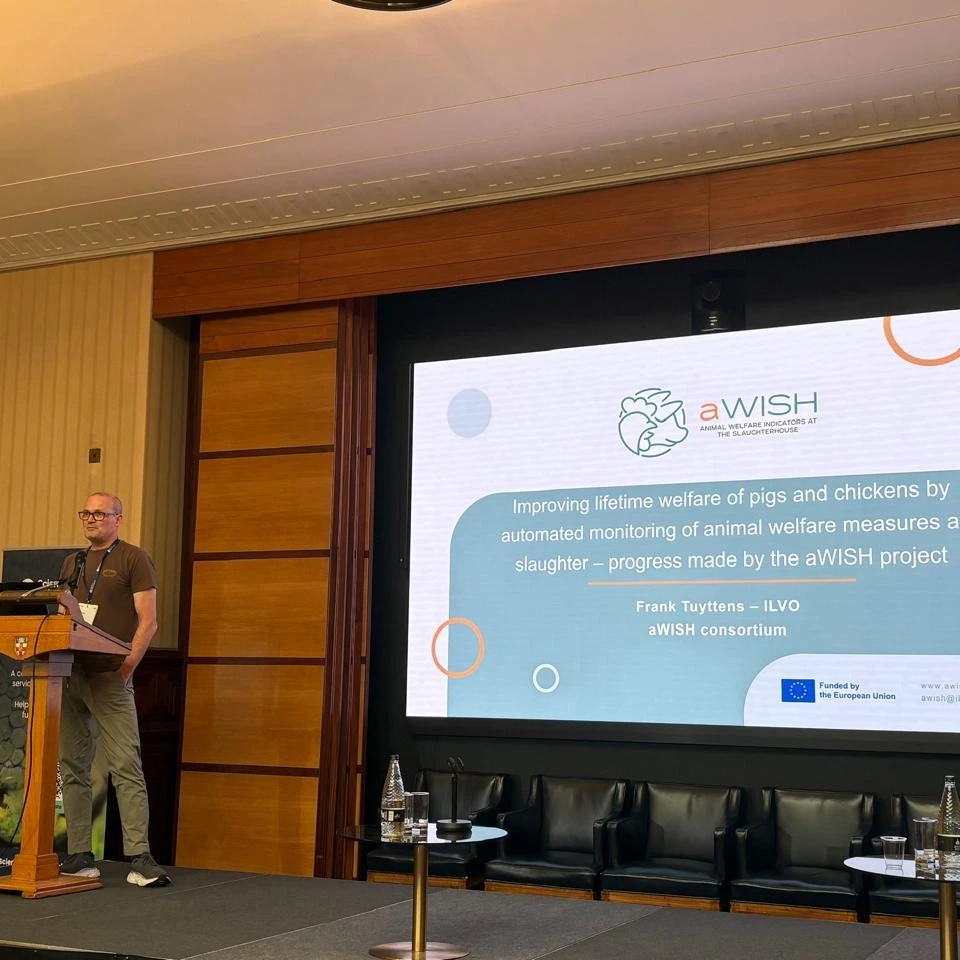
Frank Tuyttens (ILVO) delivered a comprehensive overview of the project in his presentation, “Improving lifetime welfare of pigs and chickens by automated monitoring of animal welfare measures at slaughter – progress made by the aWISH project.”
The presentation summarised the project’s major achievements, including:
- The development and validation of 16 sensor technologies across six European pilot sites;
- The creation of an interactive catalogue of animal welfare technologies;
- The establishment of the aWISH data platform, enabling the collection, processing and visualisation of welfare data;
- The development of feedback tools to support decision-making by farmers, slaughterhouses and other stakeholders.
The presentation highlighted the project’s progress towards delivering cost-effective and scalable solutions for welfare monitoring across Europe.
Research on Pig Welfare Indicators
Several presentations focused on improving welfare assessment in pigs.
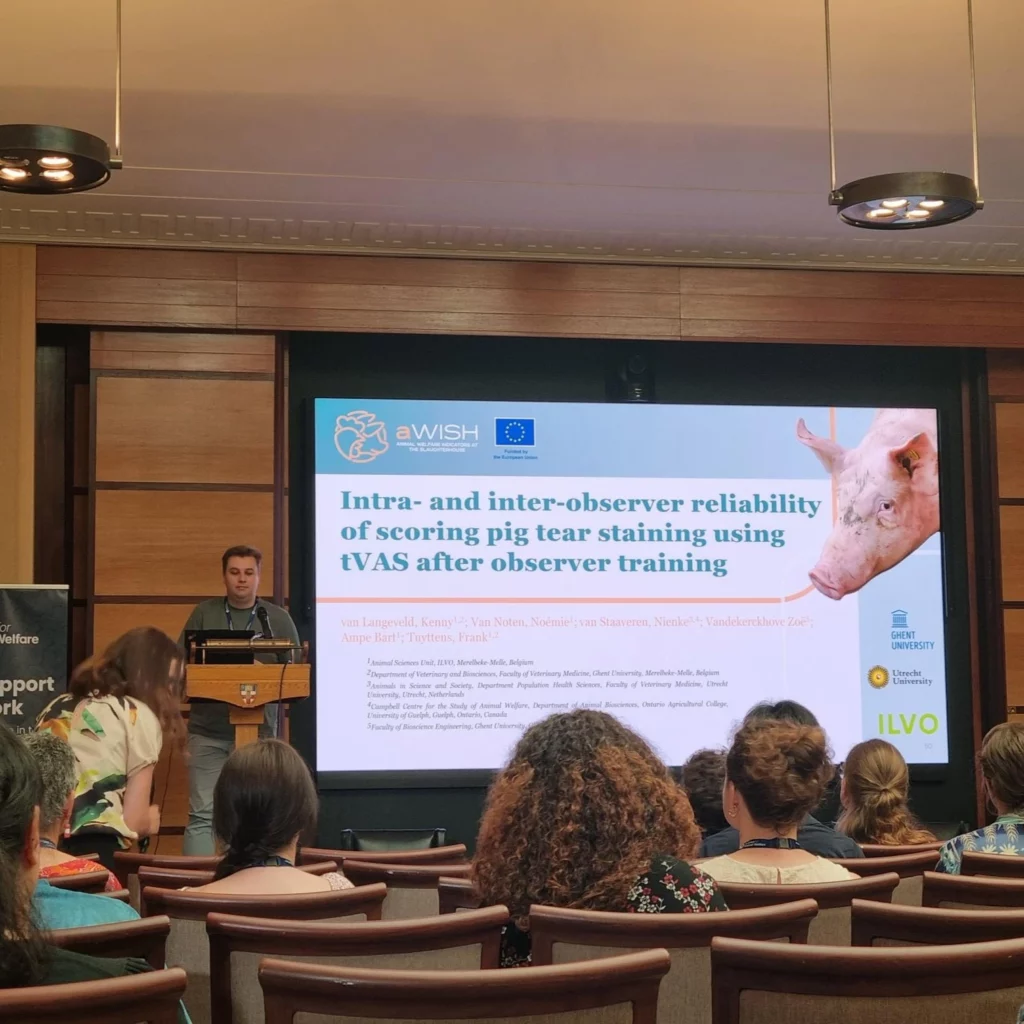
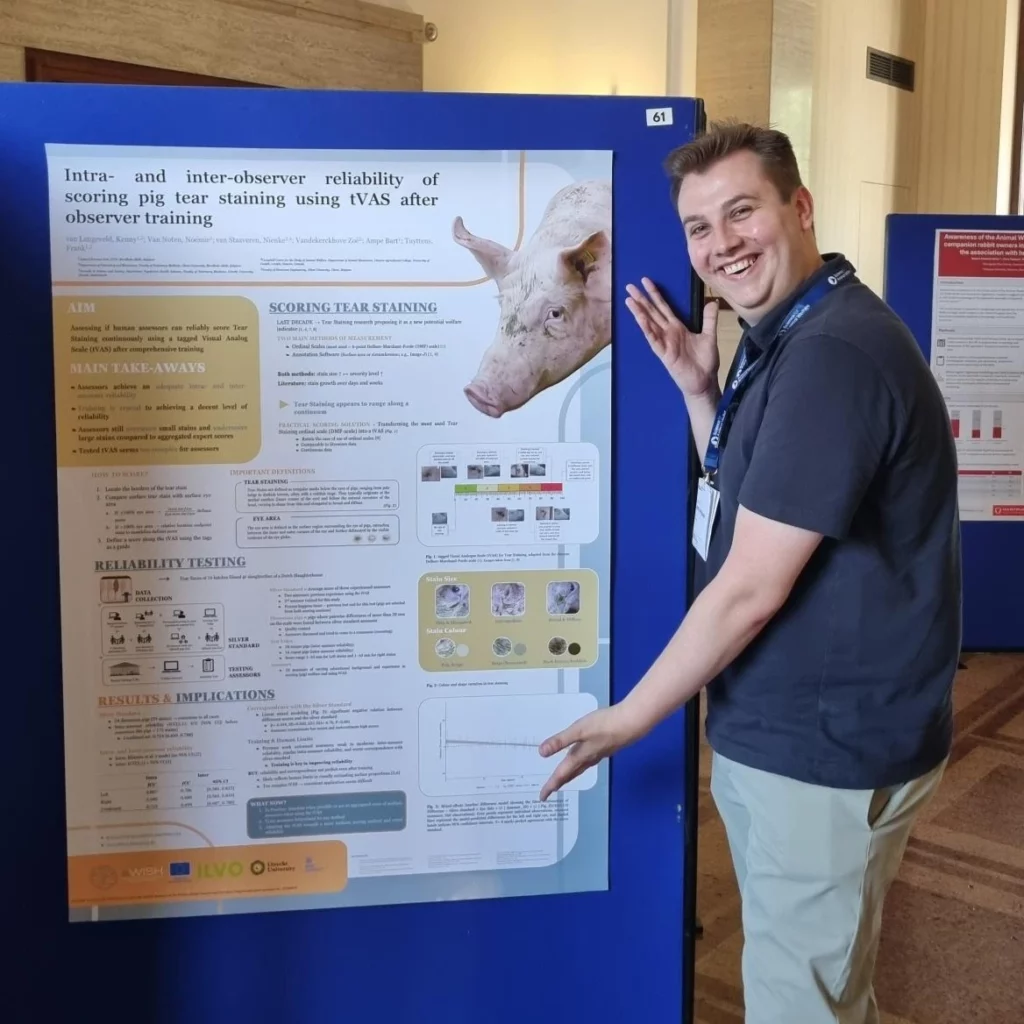
Kenny van Langeveld (ILVO) presented research investigating the reliability of scoring tear staining in pigs, a potential welfare indicator associated with stress and other welfare challenges. The results demonstrated that trained assessors can achieve moderate to good reliability when using continuous scoring methods, while also highlighting the importance of training and calibration.
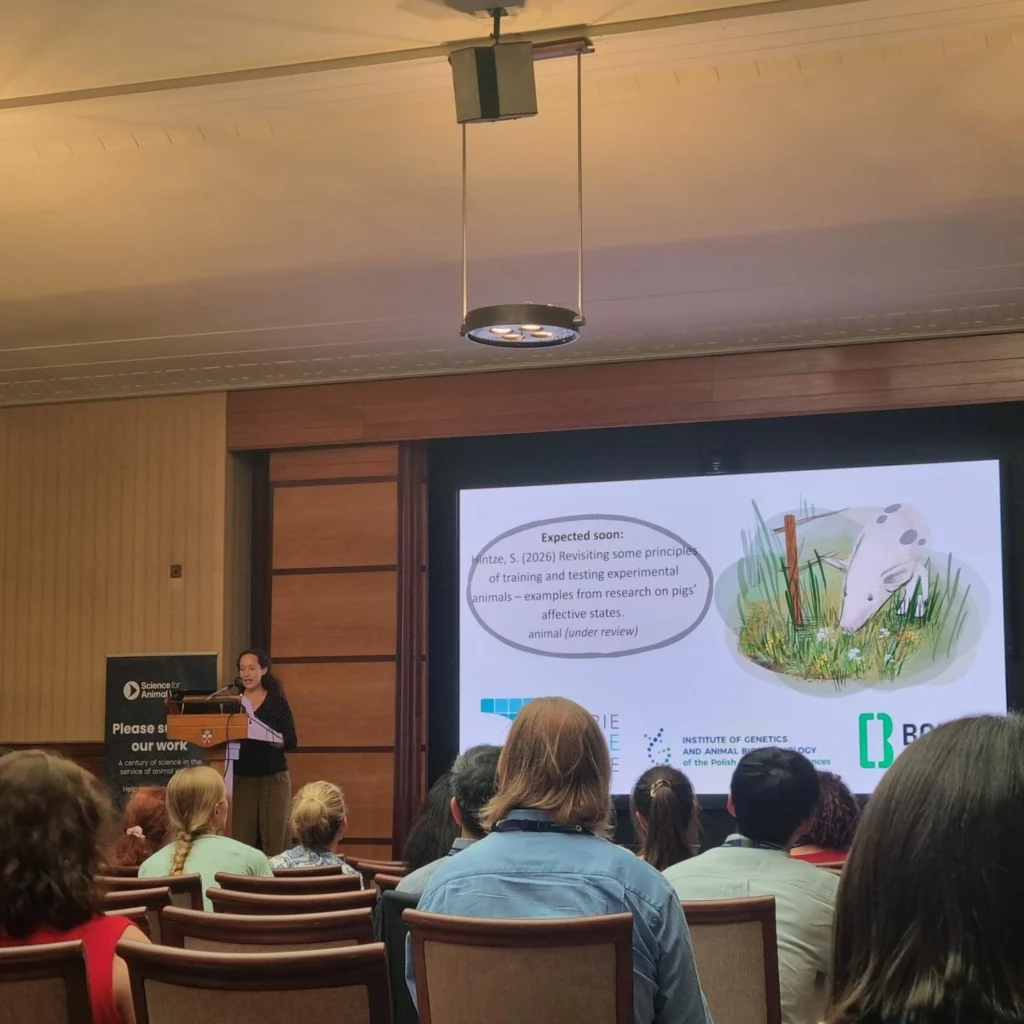
In addition, Irene Camerlink (IGBZ PAN) presented research exploring how individual differences in food preferences influence behavioural testing in pigs. The work highlighted the importance of considering individual animal preferences when designing behavioural studies and welfare assessment protocols.
Exploring Best Practices for Animal Welfare
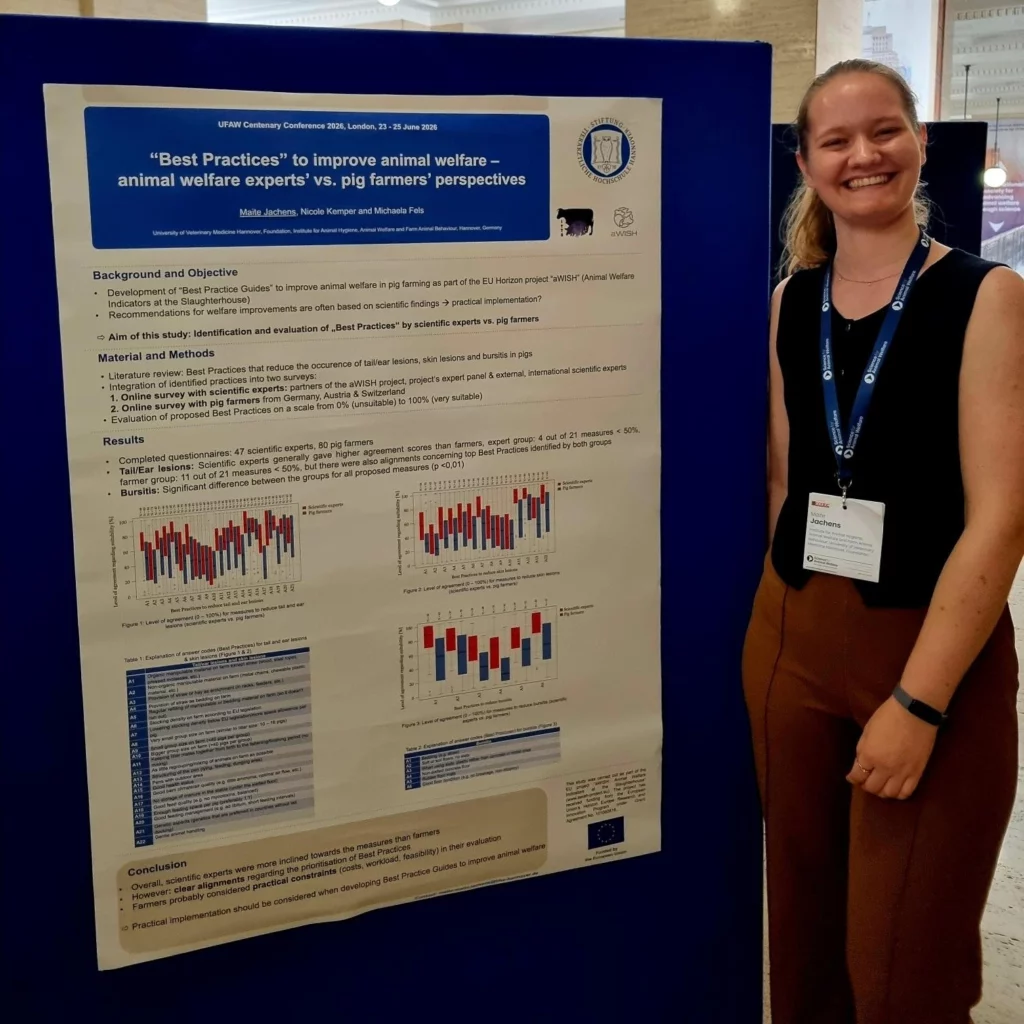
Maite Jachens (TiHo) presented a poster comparing the perspectives of animal welfare experts and pig farmers on Best Practices to improve pig welfare. The research, developed within the framework of the aWISH Best Practice Guides, identified areas of agreement as well as differences in views regarding welfare-improving measures, underlining the importance of balancing scientific recommendations with practical farming realities.
Strengthening the Link Between Science and Practice
The UFAW Centenary Conference provided an excellent opportunity for aWISH partners to share project results with the international animal welfare community and engage in discussions on the future of welfare assessment technologies.
The presentations showcased how the project is contributing to the development of innovative, science-based and practical solutions that support better animal welfare outcomes in livestock production systems. As aWISH enters its final phase, these results demonstrate the potential of digital technologies, sensors and artificial intelligence to transform animal welfare monitoring and support continuous improvement across the value chain.