


Hamburg, Germany — 10 September 2026
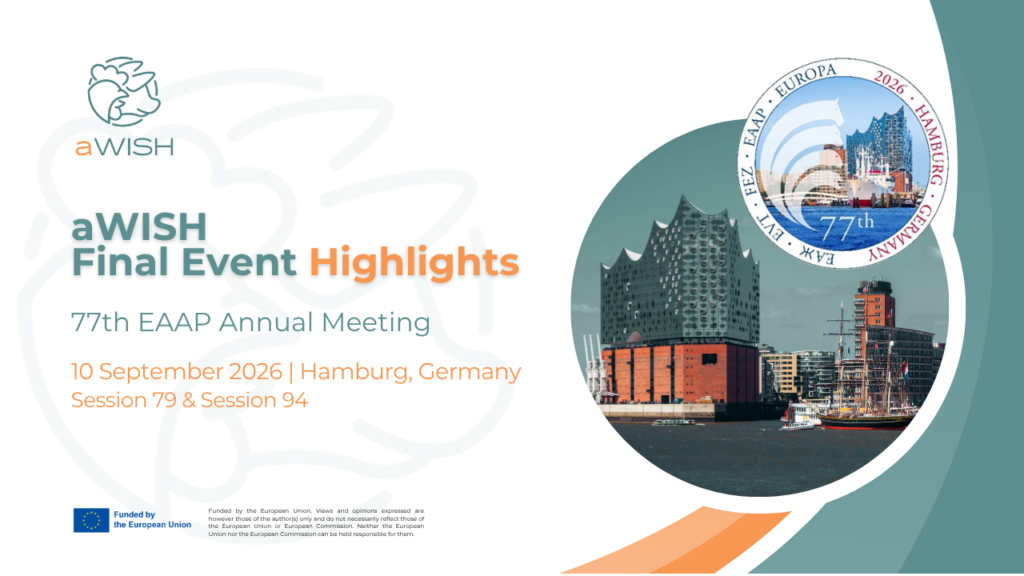
After four years of research, pilot testing and collaboration across Europe, the aWISH project marked its Final Event on 10 September 2026, held as a two-part theme session at the 77th EAAP Annual Meeting in the Congress Center Hamburg (CCH). Since it began, aWISH has worked to develop and validate automated solutions — built on computer vision, sensor technologies and precision livestock farming — for assessing and improving the welfare of pigs and broilers on farm, during transport and at slaughter, testing these tools across pilot sites and translating the results into practical Best Practice Guides for producers, processors and policymakers. The Final Event brought this work full circle, presenting the project’s own results alongside closely related research from across the sector in a session titled “Advancing Animal Welfare Assessment with PLF Technologies: Insights from the aWISH Project and Related Research.”
Part 1: From concept to validation
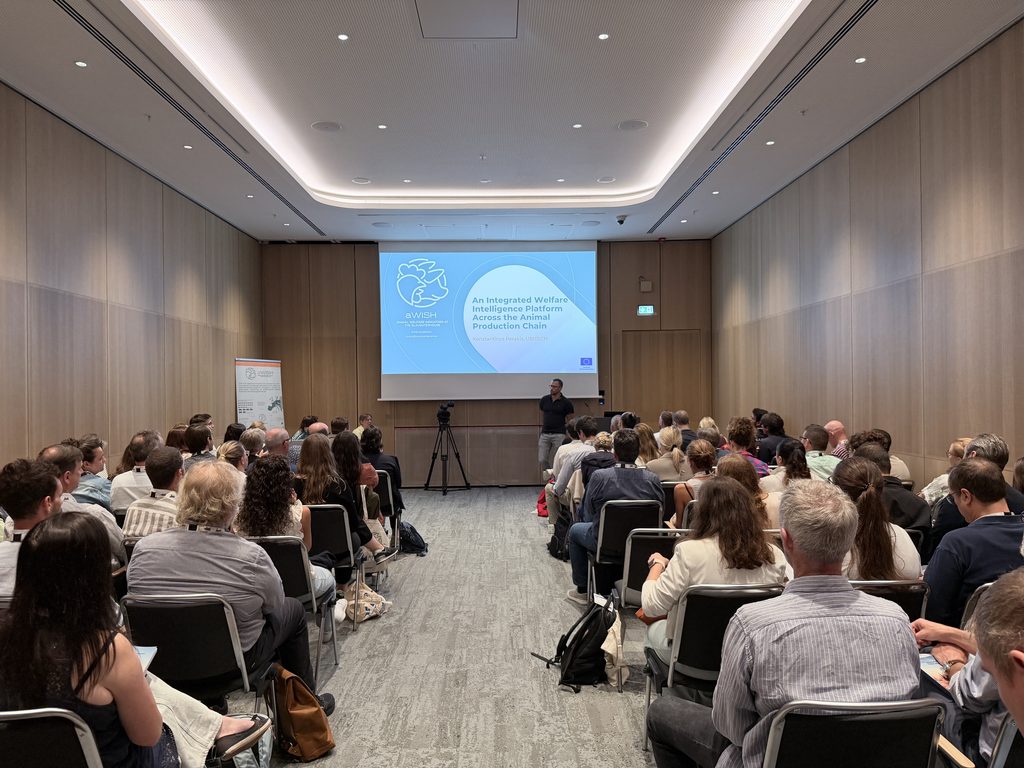
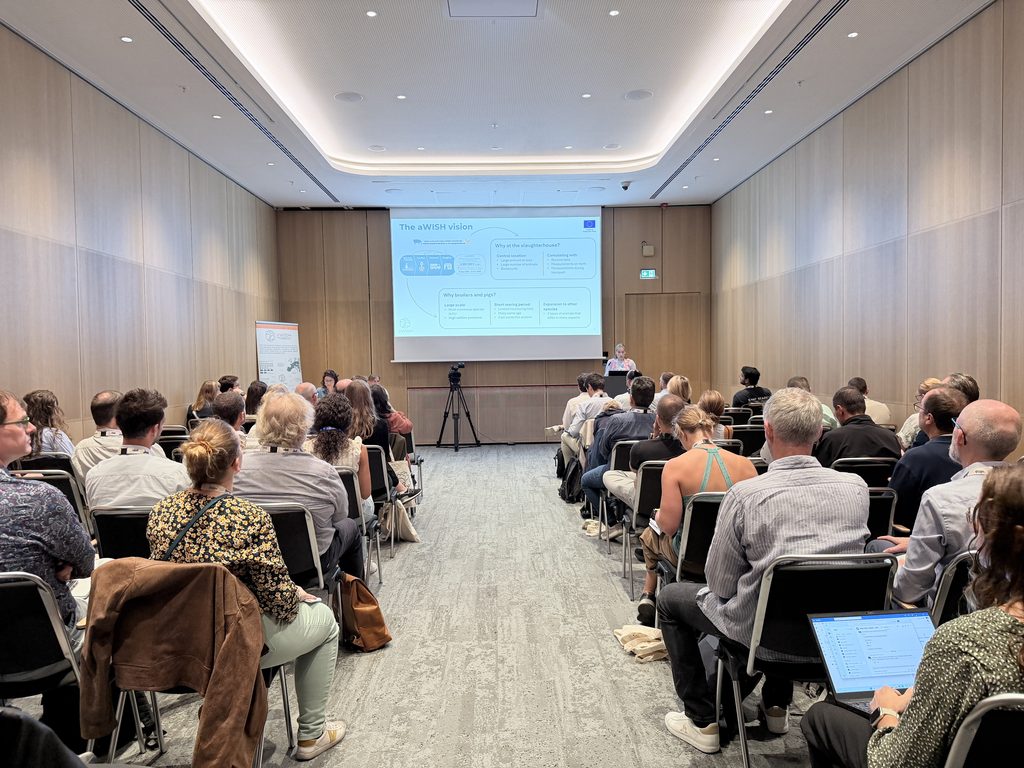
The morning opened with a presentation setting out the aWISH vision for improving the welfare of pigs and broilers through automated monitoring of welfare indicators at slaughter, followed by an invited talk tracing the past and future of using animal-based indicators to monitor welfare on farm and at slaughter. The programme then turned to digital infrastructure and data-sharing, with talks on an integrated welfare intelligence platform spanning the whole animal production chain and a roadmap for a prototype knowledge platform to track animal welfare data across Europe. Slaughterhouses shared their own experiences and expectations of adopting sensor technologies under aWISH, while further presentations covered automatic on-farm monitoring of animal health and welfare and the use of continuous barn-climate sensor data to evaluate the impact of climate advice on pig welfare.
The session moved into computer vision and detection technologies: assessing swine welfare from carcass indicators, an interactive catalogue of sensor technologies for pig slaughterhouses, automated cough detection in pigs, and validated computer vision methods for measuring tail length in finishing pigs. The morning closed with three studies directly tied to stunning assessment — automated real-time monitoring of corneal reflex to assess stunning effectiveness in a commercial pig slaughterhouse, the timing of last breath inside the stunner as a proxy for necessary exposure duration in controlled atmosphere stunning, and computer vision-based tools to predict stunning effectiveness and the need for re-stunning.
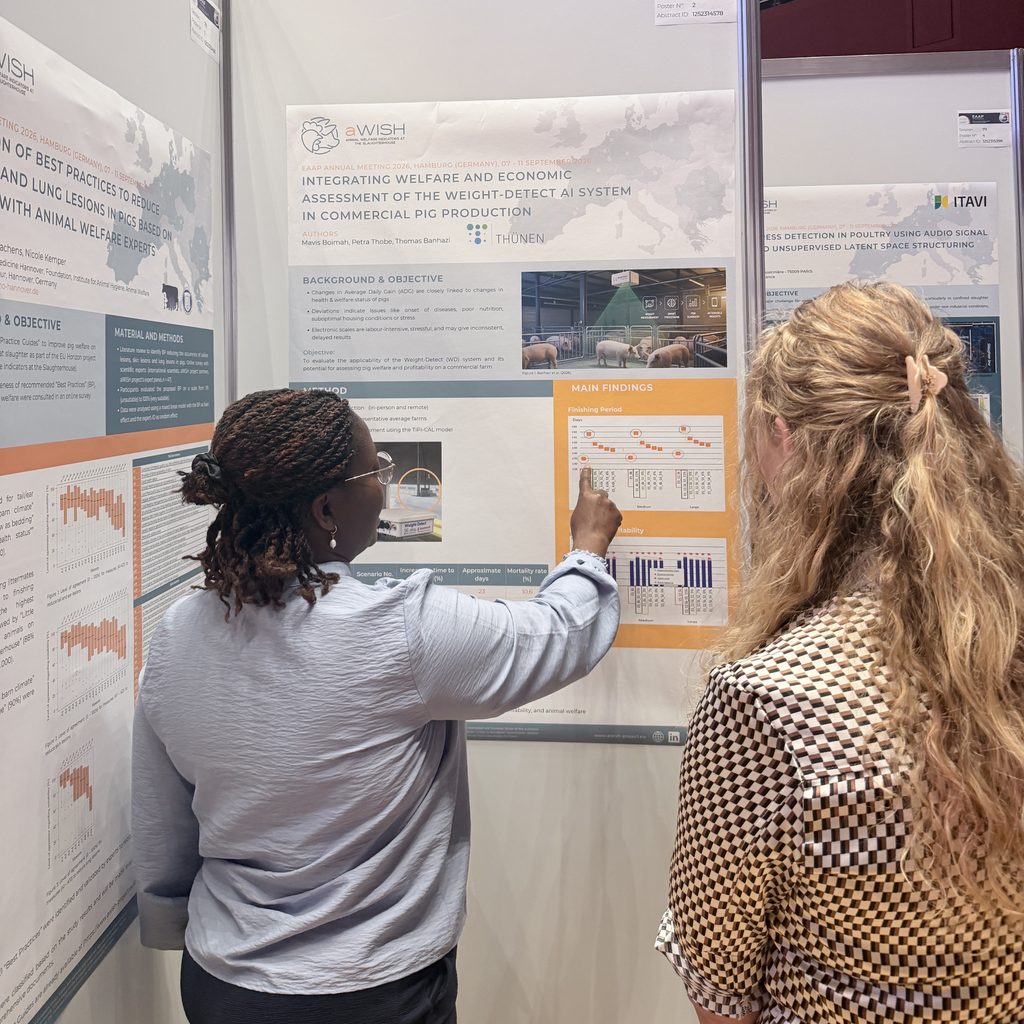
Running alongside, a dedicated poster session presented ten further studies, including validated Best Practices for reducing tail, skin and lung lesions in pigs, welfare and economic assessment of AI-based weight-detection systems, the challenges of establishing ground truth for training computer vision algorithms, thermal stress detection in poultry, automated tear-staining assessment, alternative euthanasia techniques for large pigs, and several new protocols for assessing (un)consciousness after stunning in both pigs and cattle.
Part 2 (afternoon): from evidence to policy and practice
The afternoon session opened with stakeholder and consumer perspectives on animal welfare improvements in meat production, followed by an invited talk examining whether animal welfare and biosecurity goals conflict on farm, and a comparative analysis of two frameworks for expert-based livestock welfare scoring. The programme then turned to economics and policy, covering the economic impact of enhanced pig welfare systems on finishing farms, approaches to evaluating welfare-improving initiatives at regional and national level, and lessons from aWISH on integrating animal-based welfare indicators into EU policy.
Attention then shifted to poultry and transport welfare, with a systematic review of sensor technologies for automated broiler welfare assessment, validation of automated systems for at-slaughter assessment of footpad dermatitis and hock burn in broilers, and a molecular and biochemical approach to validating vision systems that detect catching damage in broilers at slaughter. Further talks addressed heat-stress monitoring in poultry transport, the impact of bird placement on airflow in transport crates, and a real-time multimodal sensor system for pig transport monitoring. The session closed by comparing scientific experts’ and poultry farmers’ perspectives on Best Practices to improve broiler welfare.
As aWISH draws to a close, the consortium would like to thank every speaker who contributed to this Final Event — both the aWISH partners who presented four years of shared research, and the external researchers who joined the session with closely related work of their own. Their contributions, together with those of everyone who has supported the project along the way, from consortium partners to pilot sites, stakeholders and the wider research community, have made aWISH’s journey and its results possible.
The conversation continues on 8 October 2026, when aWISH will host a dedicated event for the meat industry, bringing together industry representatives, researchers and stakeholders to explore the project’s results, pilot experiences and innovative technologies for animal welfare assessment in pig and broiler production, and to discuss the future of animal welfare monitoring in the sector. Registration details will be announced soon — stay tuned via the aWISH website and social media channels.