



Context of the Problem
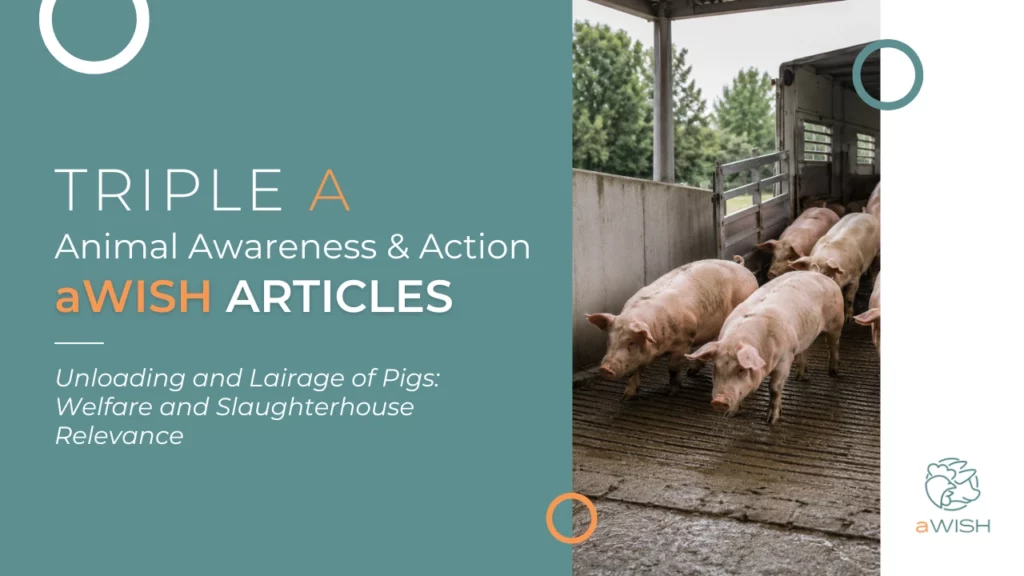
Unloading and lairage are highly sensitive stages for pig welfare at the slaughterhouse. Poorly designed ramps, steep angles, slippery floors and rough handling increase the risk of falls, injuries and stress. Delays during unloading and prolonged waiting on trucks exacerbate fatigue and may cause heat stress. Once in lairage, overcrowding, mixing unfamiliar pigs, poor ventilation and long holding times may lead to aggression, exhaustion and further stress. These challenges compromise welfare, reduce meat quality and increase the risk of carcass downgrades.
Monitoring and aWISH Project
Slaughterhouses are central points to assess the process of unloading and lairage, since pigs’ behavior and condition immediately reflect handling quality and facility design. Monitoring involves behavioural observations, checks for injuries, and evaluation of lairage conditions such as ventilation and stocking density. In the aWISH project, camera-based systems and digital tools are being tested to automatically capture behavior patterns and stress indicators in lairage. These technologies support real-time welfare assessments and allow timely interventions when problems are detected.
Best Practices
Using an optimized ramp design, ensuring non-slip flooring and enforcing gentle handling protocols are essential to reduce stress and injuries during unloading. Immediate unloading upon truck arrival prevents fatigue and heat stress. In lairage, facilities must provide sufficient space, proper ventilation and clean water. Stable groups and adequate stocking densities allow animals to rest calmly. If welfare issues such as aggression or heat stress are observed, adjustments in stocking density, ventilation or group composition should be made promptly. Feedback from slaughterhouse monitoring supports continuous improvements, ensuring better welfare outcomes and more consistent meat quality.