



Context of the Problem
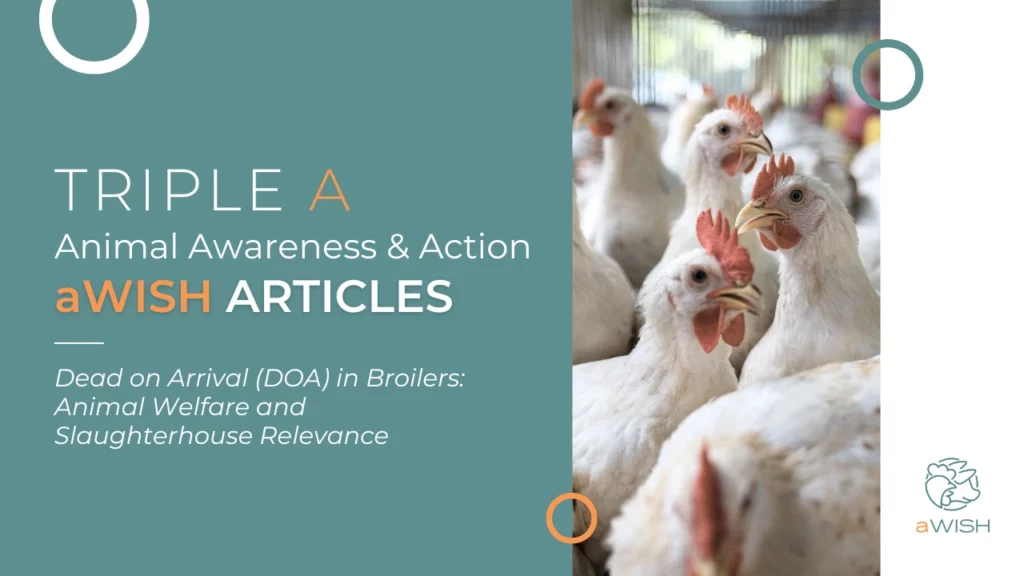
Dead on arrival (DOA) refers to broilers that die during transport or while waiting in containers before slaughter. It is one of the most serious welfare indicators in poultry production, as it reflects severe suffering at the final stage of the production cycle. DOA rates reflect both animal welfare as well as slaughterhouse efficiency, and high rates can lead to direct financial losses and reduced consumer confidence. The problem is multifactorial, with primary causes including adverse conditions during transport such as heat or cold stress, overcrowding and poor ventilation, rough handling during catching and loading as well as long lairage times. These factors interact, meaning that poor preparation, inappropriate transport conditions and delays can quickly escalate mortality risks.
Monitoring and aWISH Project
DOA rates are easily recorded at the slaughterhouse, making this stage the most reliable point for consistent monitoring. Recording DOA provides objective data that highlights weaknesses in catching, transport or lairage procedures, and systematic monitoring allows trends to be identified over time. Within the aWISH project, automated registration systems and digital data tools are being developed to consistently capture DOA information and connect it with other welfare indicators, enabling slaughterhouses to serve as central checkpoints for welfare performance across the poultry production chain.
Best Practices
Preventing DOA requires a proactive approach across all stages of the chain. On farms, careful catching with minimal stress and gentle handling reduces injuries and exhaustion. During transport, correct stocking densities, proper container design and well-ventilated vehicles are essential. Scheduling journeys outside of extreme temperature periods and ensuring rapid unloading on arrival further reduce risks. Regular reviews of DOA trends at the slaughterhouse combined with structured feedback to farms and transporters, ensure that corrective actions are taken when mortality increases. This continuous monitoring-feedback loop enables slaughterhouses to not only safeguard welfare but also enhance efficiency and maintain high standards of meat quality.