


Towards Harmonised Animal Welfare Labelling in the EU: Insights from NationalSchemes and the Case for a Method-of-Production Plus (MoP+) Label

On January 24, 2025, aWISH hosted an external webinar titled “Animal Welfare Labelling in the EU.”

Share This Post

Representatives from aWISH partner organisation, Eurogroup for Animals, and labelling organisations Étiquette Bienêtre Animal (France) and Beter Leven (The Netherlands) gave in-depth presentations exploring the current status of animal welfare labelling in the EU, the challenges faced, and how these can be addressed to provide clearer choices for consumers, and improved welfare for the EUs farmed animals.

Eurogroup for Animals introduced the jungle of labels in the EU and how consumers face 51 labelling schemes with animal welfare criteria. This leaves them confused and desperate for more information on the actual situation of the animals being farmed. For instance, according to the European Commission’s survey of EU consumers, two-thirds of consumers do not feel informed by labels regarding animal welfare, making informed choices an impossibility.

Eurogroup for Animals proposed the development of a mandatory ‘Method-of-Production Plus’ (MoP+) label. This label combines method-of-production marking with simple information on animal welfare based on a core set of animal welfare indicators. Method-of-production labelling has a proven track record, as its introduction for eggs in 2008, where all EU-produced and imported shell eggs must be labelled according to their production method (cage, barn, etc), led to a steady increase in hens being kept in alternative, non-cage systems.

An MoP+ label builds on this by grouping several aspects of animal welfare into a rating system that communicates clear information about the animal’s entire lifetime, including transport and slaughter, taking a core set of animal welfare indicators into account. For example, whilst the methods of production are used as a basis (e.g., indoors, indoors+, free-range, etc.), the plus layer will add criteria such as stocking densities, light regimes, and enrichment provisions to provide transparency on the level of welfare within each system. With this information, the consumer can access all necessary information on the animal’s life, from birth to death, to make an informed decision about the product.

Following the talk from Eurogroup for Animals, representatives of the Étiquette Bien-Être Animal label presented the voluntary animal welfare labelling scheme, which was developed in France to provide transparent, scientifically grounded information to consumers on the welfare conditions of animals used in food production. Étiquette Bien-Être Animal employs a multi-criteria evaluation framework to assign animal-based food products a score from A (highest welfare) to E (lowest acceptable welfare), based on performance across five domains: rearing conditions, health status, absence of mutilations, behavioural expression, and practices during transport and slaughter. The label was developed through a multi-stakeholder process involving NGOs, scientists, producers, and retailers, and it aims to incentivise continuous welfare improvements beyond baseline legal requirements. It uses market-based mechanisms to reward higher welfare practices, and its methodology incorporates input- and animal-based indicators to ensure a robust and comparative welfare assessment.

Étiquette Bien-Être Animal is responding to a growing demand for harmonised, transparent animal welfare communication and communicates complementary EU-level initiatives, such as the Farm to Fork Strategy and discussions on mandatory welfare labelling. While currently a voluntary initiative, the label provides a proof of concept for more structured and standardised welfare communication and may serve as a model for future regulatory frameworks at national or EU levels. It currently has species-specific standards for broiler, pigs and laying hens, and a wide reach. For instance, in 2024, the initiative was thought to cover about 40% of broiler farms and 15-20% of French production. The label represents a significant step towards integrating welfare performance as a value-added differentiator in the agri-food system, facilitating alignment between public policy objectives, supply chain practices, and consumer expectations.

Last in the webinar was a presentation from the Dutch label Beter Leven. The Beter Leven label was developed by the Dutch Society for the Protection of Animals and is a voluntary, multi-tier certification scheme for a wide range of farmed animals. The animal welfare certification scheme is designed to drive improvements for farmed animals beyond legislative baselines through market mechanisms and clear communication to consumers. The scheme is underpinned by science-based criteria for animal welfare and the Five Domains Model of welfare. It integrates input-based standards, such as space, enrichment, and lighting, and animal-based indicators, including behavioural expression and health indicators. Under the scheme, products are certified with one to three stars, reflecting increasing levels of animal welfare provisions.

The development and success of the Beter Leven label have been supported by coordinated action among government bodies, supermarkets, producer groups, and NGOs. The scheme aligns with the EU’s goal stated in the Farm to Fork strategy, namely, to integrate consumer welfare preferences into production systems and the promotion of voluntary uptake of higher welfare standards. The Beter Leven label now covers millions of animals annually, including pigs, laying hens, turkeys, rabbits, and dairy and beef cattle, and has high consumer recognition, demonstrating the feasibility of multi-tiered welfare labelling. For broilers, around 60% of Dutch broiler farmers are certified with the Beter Leven label, and in 2024, the main Dutch supermarkets announced that all of their fresh chicken would comply with 1-star Beter Leven label.

aWISH later hosted an internal webinar on the Tierschutzlabel “Für Mehr Tierschutz”, a two-tier voluntary welfare label developed by the German Animal Welfare Association. The scheme addresses farmed animal welfare across the production chain, including housing, transport, and slaughter, and is grounded in animal welfare science with species-specific standards. The Entry level exceeds legal requirements in Germany and the EU, and the Premium level goes much further, significantly enhancing animal welfare standards for farmed animals. The scheme also includes a distinct certification system that involves independently approved auditors, regular risk-based inspections, and traceability along the supply chain.

From a policy perspective, Tierschutzlabel offers a structured, scientifically grounded model for welfare labelling that aligns closely with the evolving EU objectives for transparency in consumer information. However, the label faces challenges from national frameworks in Germany, such as Haltungsform, a four-tiered system that focuses on animal housing systems, certifying products based solely on the production system (i.e., caged, barn, free-range etc) rather than considering the whole lifecycle of the animal, and factors such as stocking density and enrichment provisions. As a result, Haltungsform may give consumers a misleading impression that higher-tier products guarantee high overall animal welfare, when in fact they may only reflect better housing during part of the animal’s life. Also, in Germany, the upcoming Animal Husbandry Act (from August 2025) will make welfare labelling mandatory for certain products (specifically fresh pork from fattening pigs), requiring producers to register according to specific housing types. This will again lead to confusion for consumers and weaken more comprehensive schemes like Tierschutzlabel. Despite these obstacles, the Tierschutzlabel provides a comprehensive model that spans the entire supply chain, from on-farm practices to retail. It features robust oversight, active stakeholder involvement, and ongoing refinement of its technical standards. Both its successes and the barriers it faces offer valuable lessons for informing the development of a harmonised, EU-wide approach to animal welfare labelling.

All of these presentations on animal welfare labelling in the EU underscore both the urgency and opportunity for EU-level action on animal welfare labelling. As Eurogroup for Animals highlighted, the current landscape of animal welfare labelling is highly fragmented across 51 schemes, leaving EU consumers confused and unable to make informed choices. Eurogroup for Animals presented a promising solution, a mandatory MoP+ label, combining familiar production method categories with core animal welfare indicators to reflect an animal’s experience across the whole supply chain. This concept aligns closely with the underpinning principles of the labels: Étiquette Bien-Être Animal, Beter Leven, and Tierschutzlabel, all of which demonstrate the feasibility and opportunity for success using scientifically grounded, multi-tiered labelling systems that are based on stakeholder collaboration and robust assurance mechanisms. Whilst there are challenges with voluntary implementation and limited legislative support, these labels collectively offer a strong foundation and proof of market viability for an EU-wide MoP+ approach. Harmonising these efforts through a transparent, mandatory label could provide the clarity consumers seek and the incentives producers need to raise the welfare standards of farmed animals across the EU.


Funded by the European Union.
Views and opinions expressed are those of the author(s) only and do not necessarily reflect those of the European Union or European Commission.
Neither the European Union nor the European Commission can be held responsible for them.

Copyright © 2023 BioSense Institute. All rights reserved.

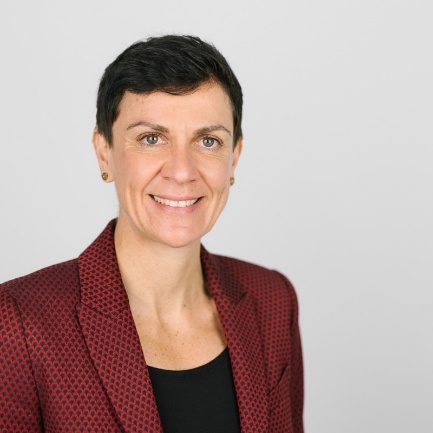
Dr Helen Lambert

Affiliation
Eurogroup for Animals/ Animal Welfare Consultancy
Biography
Helen Lambert is a freelance animal welfare scientist and founder of Animal Welfare Consultancy. She works with charities, governments, and corporations worldwide to improve animal welfare through evidence-based research, policy advice, and practical recommendations. Her work spans a wide range of animal welfare issues, including wildlife trade, farmed animal welfare, sentience science, welfare assessment, and animal welfare legislation. Helen has over 23 years of experience and training in the field of animal welfare and sentience science. She holds a PhD in Animal Sentience, an MSc in Research Methods, and a BSc (Hons) in Animal Behaviour, and has authored a wide range of scientific publications, reports, and policy-focused outputs.
Contact
lambert.helen@outlook.com

Dr Christina Pfeiffer

Affiliation
University of Veterinary Medicine (Vetmeduni) Vienna, Austria
Biography
Dr. Christina Pfeiffer is a livestock scientist specializing in pig husbandry, production and welfare. After studying livestock science with a focus on welfare and behaviour, she earned a PhD in quantitative genetics and animal breeding. Her early career centred on health, welfare, and behavioural traits in dairy cows and pigs, including developing and implementing a piglet vitality index for maternal breeding programs. After several years in the pig industry, she returned to academia to advance precision livestock technologies to assess animal-based indicators in pigs.
Contact
Christina.Pfeiffer@vetmeduni.ac.at

Dr Johannes Baumgartner

Affiliation
University of Veterinary Medicine (Vetmeduni) Vienna, Austria
Biography
Johannes Baumgartner is working at the University of Veterinary Medicine (Vetmeduni) Vienna, Austria, where he focuses on pig behaviour and management, including organic farming. He has been in actively involved in the development of free farrowing systems of sows and in precision livestock farming developments in the pig industry. Examples of his work include the automatic counting of piglets at birth and tracking of sows through eartag sensors.
Contact
Johannes.Baumgartner@vetmeduni.ac.at

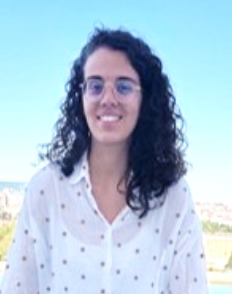
Àngela Ramon Pérez

Affiliation
Autonomous University of Barcelona (UAB)
Biography
She holds degrees in Animal Science and Veterinary Medicine and is currently pursuing her PhD at the UAB. Her research focuses on the development and validation of technologies for monitoring pig welfare. She has experience in slaughterhouse-based welfare assessment, automated image analysis, and sensor technologies. Her work aims to transform animal-based data into practical tools for welfare assessment and farm-level decision-making.
Contact
angela.ramon@uab.cat

Dr. Pol Llonch

Affiliation
UAB, Spain
Biography
I am a veterinary scientist with expertise in farm animal behaviour, welfare assessment, stress physiology and precision livestock farming. My research combines behavioural analysis, physiological biomarkers and sensor technologies to develop innovative approaches for monitoring and improving animal welfare in livestock systems. I have extensive experience working with several farm species, particularly pigs and cattle, and have led and contributed to numerous European research projects in the field. I currently lead a research team at the Universitat Autònoma de Barcelona focused on advancing animal welfare science and its practical application on farms.
Contact
pol.llonch@uab.cat

Maite Jachens

Affiliation
Institute for Animal Hygiene, Animal Welfare and Farm Animal Behaviour, University of Veterinary Medicine Hannover, Foundation
Biography
Maite Jachens studied Veterinary Medicine at the University of Veterinary Medicine Hannover, Foundation (TiHo) in Germany. She currently works as a research assistant and doctoral student at the Institute for Animal Hygiene, Animal Welfare and Farm Animal Behaviour at TiHo. Her research focuses on identifying and evaluating Best Practices to improve the welfare of fattening pigs and broiler chickens on farm, during transport and at the slaughterhouse. She is particularly interested in how scientific experts and farmers evaluate these practices, bringing together scientific evidence and practical experience to support feasible animal welfare improvements.
Contact
maite.marie.jachens@tiho-hannover.de

Prof. T. Bas Rodenburg

Affiliation
Utrecht University, Utrecht, The Netherlands
Biography
Prof. T. Bas Rodenburg is Professor in Animal Welfare at the Faculty of Veterinary Medicine of Utrecht University in The Netherlands. The research of Bas Rodenburg aims at improving the methodology for assessment of animal welfare. Currently, he is project leader of the EUPAHW project, Eyes & Ears focusing of automatic monitoring of animal welfare on commercial farms. He is also work package leader in the EU project aWISH, focusing on monitoring animal welfare at the slaughterhouse. Rodenburg is a member of the Dutch Council on Animal Affairs (RDA) and has been one of the architects of the concept of Humane Livestock Farming in The Netherlands. He is also Joint Editor in Chief of the scientific journal ‘Animal Welfare’.
Contact
t.b.rodenburg@uu.nl

Prof. Thomas Banhazi

Affiliation
Wroclaw University of Environmental and Life Sciences, Wroclaw, Poland and InnoTech Vision ApS., Tjele, Denmark
Biography
Thomas Banhazi completed his PhD studies at the University of Adelaide, Australia and worked at the University of Southern Queensland and at the Taiwan National University. As part of his academic activities, Thomas was involved in the delivery of 8 under- and 4 post-graduate courses and published in excess of 250 journal articles, book chapters and conference proceedings. He has successfully obtained 8 patents on a number of innovative technologies in the US, Australia and Europe and he is currently actively engaged in the commercialisation of his patented inventions via his three private companies established in Europe and Australia. Thomas has been involved in approximately 40 research projects both in Europe and Australia and his expertise is mainly related to PLF applications and housing & environmental assessment methods.
Contact
thomas.banhazi@plfag.com

Dr. Petra Thobe

Affiliation
Johann Heinrich von Thünen-Institute, Institute of Farm Economics, Braunschweig, Germany
Biography
Petra Thobe, Agricultural Economist, studied Agricultural Sciences with a specialization in Agricultural Economics in Bonn, Toulouse, and Tartu, and completed her PhD at the University of Göttingen. She has been leading the Poultry Production Economics working group at the Thünen Institute of Farm Economics since 2017 (research associate) and she coordinates the agri benchmark International Poultry Network, (Thünen Institute – Germany).
Contact
p.thobe@thuenen.de

Prof. Björn Forkman

Affiliation
University of Copenhagen, Denmark
Biography
Björn Forkman was trained as a biologist at Lund University, and took his PhD at Stockholm University in the area of Ethology. His interest has mainly been in the mechanisms of behaviour, especially in the areas of learning/cognition and motivation, and how these interact. During later years his research has focused more and more on animal welfare, both assessment and melioration. Since his PhD he has mainly worked in the field of applied ethology, both in Sweden at the Agricultural University, at the Roslin Institute, Edinburgh in Scotland and now at the faculty of Health Sciences - University of Copenhagen (the faculty is the former Royal Veterinary and Agricultural University of Denmark).
Contact
bjf@sund.ku.dk

Dr Noémie Van Noten

Affiliation
ILVO (Flanders Research Institute for Agriculture, Fisheries and Food)
Biography
Noémie Van Noten has a Master and a PhD in Bioscience Engineering – Agriculture. After 2 years of building experience as an R&D manager in a feed additive company, she joined the ILVO Animal Science unit in 2022, where she is working as a researcher on projects focusing on animal welfare and animal nutrition.  
Contact
noemie.vannoten@ilvo.vlaanderen.be

Prof. Frank Tuyttens

Affiliation
ILVO, Merelbeke-Melle, Belgium
Biography
Frank Tuyttens is coordinator of Farm Animal Welfare & Behaviour research at the ILVO, parttime visiting professor at the Faculty of Veterinary Medicine of Gent University, and member of the EFSA Animal Health and Animal Welfare panel. He has supervised 20 PhD students and authored >200 peer-reviewed papers on farm animal welfare and ethology. He is scientific coordinator of the aWISH project.
Contact
frank.tuyttens@ilvo.vlaanderen.be

1. aWISH Introduction

We would like to invite you to participate in the aWISH Expert Panel, as we believe that your experience and knowledge will contribute greatly to a key consultation body of the project. aWISH is a 4-year project funded by the European Union under the Horizon Europe Research and Innovation programme. Before you decide to participate in the aWISH Expert Panel, please take the time to read this document carefully to understand what your involvement will be in our project’s activity. If there is anything you do not understand, please feel free to ask questions.

1.1 What is the aWISH project about?

In the EU, a challenge that still remains is to reconcile the social and moral demand for a high level of animal welfare with other pillars of sustainable livestock production. Indeed, 82% of Europeans believe that farm animals should be better protected than they currently are. A broad definition of animal welfare refers to the feelings and physical well-being of an individual animal. Broilers and pigs are the farm animals EU citizens care most about, and they are also the most important meat-producing animals in the EU and worldwide. Both pigs and broilers have significant welfare problems at all stages of production (on-farm, loading and transport, unloading and slaughter), leading a growing number of citizens to question the social license to produce. Ambitious and effective, but also practical and efficient solutions are needed. This is where the aWISH project comes in to fill this gap! The aim of aWISH is to develop and provide a cost-effective solution for assessing and improving the welfare of meat-producing livestock in Europe. The aWISH solution is based on the automatic monitoring of animal-related indicators at slaughter. The necessary technologies will also be developed to collect complementary data on farm or during transport. Pilot and development activities will be carried out in 6 broiler and fattening pig production chains across Europe using a lean multi-actor approach to test and validate the project results. A catalogue of animal welfare indicators will disseminate all validated indicators and standardised data collection methods. Best practice guides will be developed to improve key aspects of animal welfare in pigs and broilers and to help external stakeholders use aWISH technologies and tools. In this context, the aWISH project will set up expert panels that will be composed of representatives of actors from the entire farm to fork value chain across the EU. The expert panels will have the function to retrieve and share feedback on technology, processes, farming practices, industry, sector regulation and markets, as well as society and perceptions. In this way, stakeholder participation in expert panels could help initiate interdisciplinary dialogue, promote interaction with target groups and associations, and strengthen trust between different actors.

2. Useful Information

2.1 Is my participation voluntary and what does it involve?

Your participation in the aWISH project is entirely voluntary. If you decide to participate in an aWISH activity, we will ask you to sign an Informed Consent Form to collect and process your data. The project will last 48 months, but you will only participate for as long as you wish.

2.2 Purpose of personal data collection

As mentioned above, the expert panel will have the function to retrieve and share feedback on technology, processes, farming practices, industry, sector regulation and markets, as well as society and perceptions. In order to do this effectively, we need to process some of your personal data:
  • Your contact information
  • Demographic information (age, gender, country of origin)
  • Professional information (where do you work, what position do you hold, what is your area of expertise)
  • Personal opinions on the subject

2.3 What we will do with your data

The information you provide is confidential. Your consent form will be kept separate from the observations collected during the course of the project activity. We will share your data with other aWISH project partners involved in the data analysis and reporting process. Once the data is analysed, a report of the findings may be submitted for publication. The project's deliverables that will be derived by this activity will not include your personal data or any other information that could identify you. The results of this project activity may also be shared with representatives of the European Union (e.g. the Project Officer evaluating the project's or the reviewing EU agencies). Only broad trends will be reported and it will not be possible to identify any individuals.

3. Access, deletion of information or withdrawal of consent

Under the EU’s General Data Protection Regulation (GDPR), you have the right to request to: (i) provide you with a copy of your data; (ii) correct your data if you believe they are inaccurate; (iii) erase your data; (iv) restrict or stop processing your data; or (v) provide your data in an appropriate format and transfer them to another organisation. In addition, you may withdraw your consent and therefore your participation at any time without consequence. Anonymous data already collected will be used as we cannot trace the information back to you. No further data will be collected or other procedures carried out in relation to your information. If you wish to have the personal data we hold checked, amended, corrected or deleted, or if you wish to withdraw your consent, you can contact the responsible partner listed below.

4. Contact Information

Partner name: WHITE RESEARCH SRL
e-mail: akyriakidis@white-research.eu

5. Informed Consent Form

I confirm that I understand that by ticking each box below I am consenting to this element of the study. I understand that it will be assumed that unticked boxes mean that I DO NOT consent to that part of the study. I also understand that by not giving consent for any of the elements, I may be deemed ineligible for participating in this project’s activity.
 

6. Declaration of Acceptance

I, the undersigned
acknowledge that I have read and agree to be bound by the aWISH Expert Panel Terms of Reference. I agree to participate in the aWISH Expert Panel in my individual capacity and, as such, may not assign or be substituted for any other person to perform the work without prior written agreement with the aWISH Expert Panel Consortium. I agree not to disclose any information given in the course of the Expert Panel’s work unless the aWISH Consortium agrees to releases me from this obligation, and to respects the confidentiality requirements. I declare that I fully and unconditionally accept my appointment as an aWISH Expert Panel member as described in the Terms of Reference. I agree that any contribution I make as an aWISH Expert Panel member may be used by the aWISH consortium for reporting purposes or to align project activities to the needs of relevant stakeholders. I consent to the processing of my personal data necessary for my participation in the aWISH Expert Panel.

Welcome to the awISH Project website

Before we dig in we would like to know a little more about you. Group that describes you the best is: