



Context of the Problem
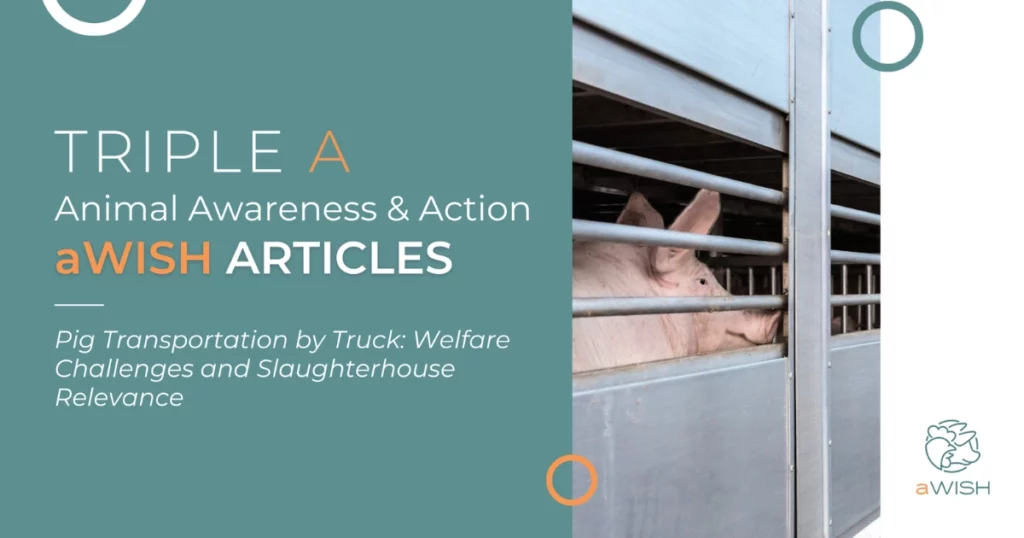
Transport from farm to slaughterhouse is one of the most stressful stages in a pig’s life. Stress begins during loading, when pigs leave their familiar barn environment. Additionally, steep ramps, overcrowding, rough handling or lack of staff training can cause fear, injuries and exhaustion. During transit, pigs may be exposed to a number of stressors such as heat or cold stress, poor ventilation, mixing with unfamiliar conspecifics and limited space. Vehicle design, ventilation efficiency and journey duration strongly influence animal welfare. At unloading, additional risks arise if handling is rushed or poorly managed. Welfare consequences include aggression after mixing of unfamiliar pigs, injuries, fatigue and even animal deaths. From an economic perspective, transport stress may lead to pale, soft, exudative (PSE) or dark, firm, dry (DFD) meat and thus can reduce carcass quality. Dead on arrival (DOA) represent both a major welfare concern as well as a financial loss.
Monitoring and aWISH Project
Slaughterhouses provide a central checkpoint for assessing transport outcomes, since the effects of transport are directly visible upon arrival. Indicators include DOA rates, signs of fatigue and the prevalence of injuries and other health issues. Monitoring at this stage is essential because it objectively reflects loading, vehicle and journey conditions. Within the aWISH project, digital monitoring technologies are being developed, such as camera-based systems, sound analysis and automated DOA registration, as well as lesion scoring tools. These innovations allow systematic data collection, feedback to transporters and farms, and benchmarking to improve welfare standards across the supply chain.
Best Practices
Mitigation requires attention at all stages of transport. Proper vehicle design with adequate ventilation, optimised stocking densities and gentle handling during loading and unloading are essential to minimize stress. Transport during extreme temperatures has to be avoided, and journeys should be well planned to limit duration and waiting times. Slaughterhouse monitoring data should be used proactively to identify recurring issues and trigger reviews with transport companies and farms. Close collaboration between slaughterhouses, transporters and farms enables early interventions improving both welfare outcomes and operational efficiency.